The moment reaches farther than the action.
The game begins digitally, but the relationship belongs to two Houses. Age rules, invitations and the moment of stopping survive even when licensed play opens somewhere else.
08 / Across the street or across the board
Two Houses can play chess together—or open the existing GAMES service in context.
You may know this feeling
For anyone whose best online game ended with a real rematch across the street.
The real moment
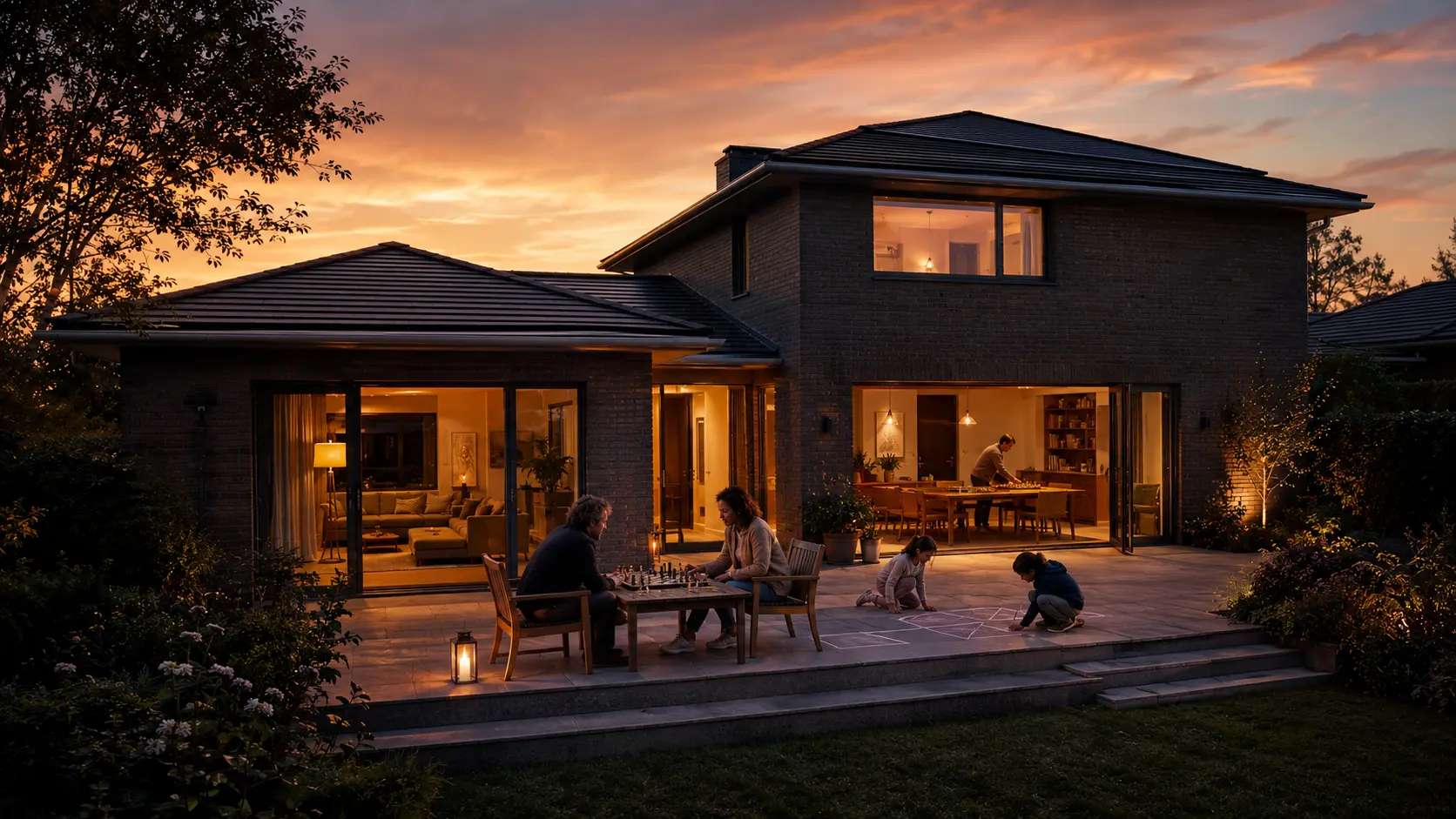
The Blue Door challenges The Courtyard House. MYHOUSE can host a simple shared chess board, or bring the right residents into GAMES. Invitations and safety remain with the Houses; GAMES opens the connected room and licensed gameplay remains with its publisher.
The game begins digitally, but the relationship belongs to two Houses. Age rules, invitations and the moment of stopping survive even when licensed play opens somewhere else.
It can connect cousins, neighbours, clubs and distant grandparents without forcing any of them into a public gaming identity.
03 / THE LAST IMAGEThe board keeps Saturday's unfinished position while the players cross the street to argue about the last move in person.
The situation creates the choice
These are not generic menu items. They exist because this moment makes them useful.
Follow this choice
A shared board keeps turn and session state between two Houses.
The quiet layer underneath
Applies resident, age and House participation rules.
Owns invitation, participants, session time and game status.
Accepts the contextual House handoff and opens the connected provider room; licensed assets remain publisher-owned.
Where this story lands
The match closes with one useful question: courtyard rematch on Saturday—or leave the board until next time?
More from Play & culture
Continue through the same House from another person’s point of view.